
Aug 13, 2026
Transit on the Move: Laurie McElwee

Transit on the Move is a dynamic interview series spotlighting transportation leaders as they share insights and innovations on the road ahead for our evolving transit landscape. Please enjoy our feature interview with South Central Regional Mobility Manager Laurie McElwee conducted by Multimedia Manager Isabelle Brown.
Isabelle Brown: Your career has centered on helping seniors, veterans, and individuals with disabilities and make sure that they can remain independent through transportation. What drew you to this work and what has kept you passionate about it over the years?
Laurie McElwee: For as long as I can remember, I was raised in a family that cared about giving to people, giving your best. And if someone was sitting alone in the lunchroom, I was expected to go sit with them and get to know them and just believe that everyone is created equal and everyone deserves the same chances and availability. Early on, I had that lesson. I would sit with the seniors at my grandma's table and I would and paint their toenails and fingernails. And I would shovel their walks in the winter. And it just was the right thing to do. And then as an adult, it became more of a passion. It grows as the years go on. And having to help my grandparents and my parents with transportation, It's what we did back in my generation. We helped people. But today I'm hearing more and more that children of seniors and individuals with disabilities and parents are working. They're busy. Sometimes they're working two and three jobs, so they’re not always available. So it just makes sense to get to know your regional mobility manager, what they have to offer, their contact information. And even if you don't need me now, you will in the future. I think today we'll probably be mentioning about planning ahead for that time when it comes. Even if you're driving, your car may not start, or if you're getting your knee or hip replaced, you can still drive, but it won't be for six more weeks. Know what's out there and have a folder with all information, brochures, applications set to go so that when you need something, you're all set and the process of medical surgeries or tests are already in place because you prepared for that day.
IB: Transportation is often viewed as simply getting from point A to point B. From your perspective, what are people missing when they think about transit in that way?
LM: I think using transportation to get from point A to point B is a misconception. I think it's much more than that. It involves the economic situations of people, where they live, how much money they have, what exists, what doesn't exist. We are having to develop transportation, find out what's still needed, and listen to the voices and go to our partners in our meetings, the Council of Governments, our transit providers, the phone calls that we get on a daily basis. Listen to their stories. Realize that if you're not able to help them, it's probably because there isn't much there. And that's a sad thing. And I like to be able to sleep at night. I don't like to tell people no, but it is the reality. We have a pot of money and it'll only stretch so far. But luckily in transportation and the people that work for the people that I serve, they care, and they partner, and they share their grants and their information. I was at a Hartford Healthcare presentation and I found out they had a grant for individuals with cancer. And also sometimes out there, might be something for dialysis. And those are life-saving appointments that people have to get to. And sometimes people are alone. It's sad to say, but their friends or family maybe have passed on or they live in another part of the country and they have nothing or no one. I do my best. I come with energy to do a little better every day and never try to send someone out with a no or with little hope. That's my goal every day.
IB: Throughout your career, you've built partnerships across agencies, nonprofits, healthcare providers, and communities. Why is collaboration so essential to solving transportation challenges?
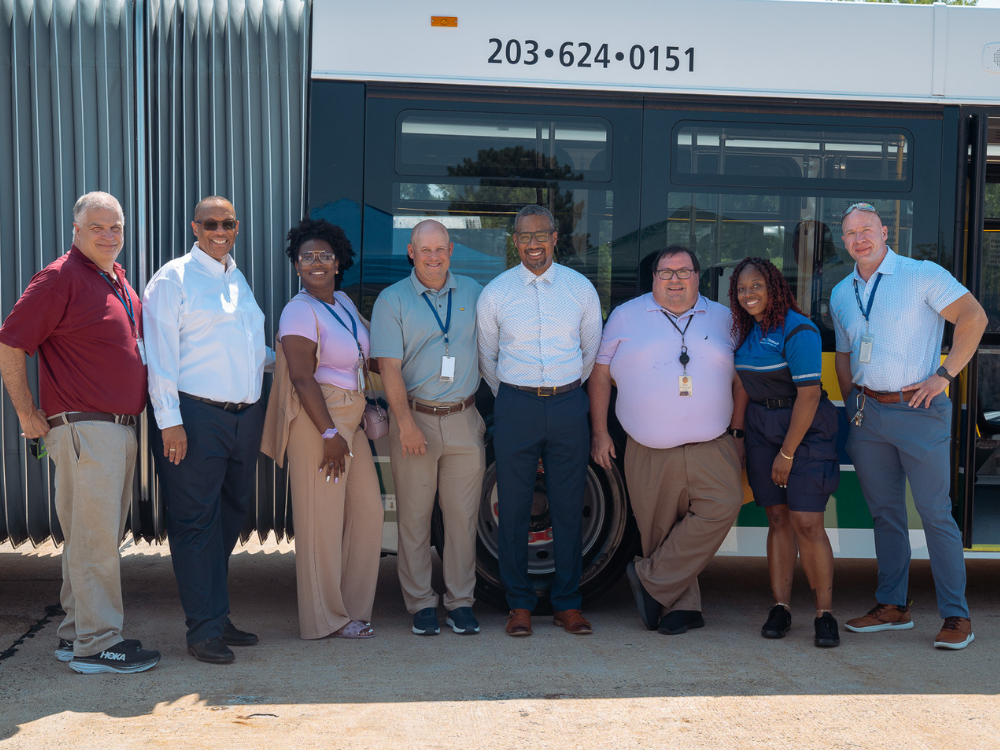
LM: Because there's towns like Woodbridge that had a (microtransit) vehicle, but they didn't have someone to drive the vehicle for their senior center. It was as easy as joining a partner in the next community over. They have a driver, but they don't have a vehicle. Something like bringing people together and finding out how they can help each other. They're not competing. They're not worried about anything but getting seniors to their senior centers, enjoying their community, getting to church, voting. It's all important. And when that doesn't happen, they're in their homes depressed and alone. And that's not a good option. But it's just developing meaningful relationships. And that's what's happened today with the interview, why you're all here. And from the day we had a meeting, we met all of you in marketing. We met the executive director of CTtransit, Vanessa Brooks, who's the head of marketing. My phone or emails have not been quiet since. It's a tried and true connection, and it wouldn't have happened without someone like Joe Comerford and CTtransit coming together and caring about what I do and seeing how what I do can help what they do. Partnerships are so important, and it's just a matter of knowing you're there, how to get a hold of you, and finding the helpers in the community.
IB: What are some of the biggest mobility challenges you see in Connecticut today? And where do you see opportunities for progress?
LM: I would say an important one is in the rural areas or the areas that the buses don't go quite that far into a town or a city. It could be to the waterways or to a train station. They can get there part of the way. There are people who can't afford transportation, can't afford to get to other places, like a lot of the doctors in our smaller towns have moved to bigger cities. When they need specialized surgery or medical attention, they have to go further. And transportation doesn't always go that far. That's when I give my spiel of people at my church, take turns giving people rides that need it for medical or anything else. Civic organizations, connect with your towns, find other friends, be involved in community volunteering. That's where I've met a lot of people and I've had people say to me, well, if I could volunteer for anyone that needs transportation, I'll do it. One of my first talks was with a veteran's coffee house. And so I went there and talked, and they kind of looked a little glazed over, but I try to do some humor and an activity and make it a little spicier and more interesting, especially for the people who I know need it, who need the information. So I try to think of things that'll help them remember all the information I'm giving them. But at the end of my talk, I'll never forget one of the veterans said, “well, thank you for your information and we'll save your brochures, but we help each other. We're here for each other. And if they need rides, we help them.” Well, that was 12 years ago. Now rolling forward, it's getting harder and harder as the veterans start to age and they're in the same predicament. And the younger veterans, again, are working and they're busy, they have families and they might live in a region that they can't get to. While they're still helping each other, the need for transportation is so important. From the beginning of times when they found out that wheels could help them get further faster, we're still trying to reinvent that wheel as far as improvements and programs that exist. And I'm lucky to work for River Valley Transit because they try every pilot program, every transportation idea that exists, whether it's new technology or the old technology, they will try every one. It really depends on the area that you live in. With South Central and the Middletown area and the Estuary District, they have quite a few options to choose from. But other people have very few. I always tell people, be careful about the community you live in. You might be okay when you're starting out and you have a family, you're young, you're driving, but as you age in your community, what does their senior center provide? What transportation exists through your senior center, through your town? And are Ubers likely to come and get you? And maybe they can take you, but they can't pick you up. So I try to present as much information as I can about existing transportation. listen to their wish list of what's needed and what they'd like to see happen. And I pass it forward to Joe Comerford, the executive director here through Council of Governments, through nonprofits and social services, and just talk about the wish lists and possibilities of can we get another grant to maybe stretch this program into this region or for this time period. The programs are there, but they don't always fit 100% of the needs. I'm a voice to help them know about the gaps and barriers in the town and not let it go, just to keep talking about it.
IB: Before working in mobility management, your background included nonprofit development and community engagement. How have those experiences influenced the way you approach your work today?
LM: I was hired through nonprofits to pay attention to the heart of the organization: why it exists, what is needed, what people need that maybe they don't know they need. Maybe they're just hiding in their house, not knowing where to turn to. So I talk about what is needed, how it can help them, and how to get them signed up. We may take for granted that people can comprehend an application for transportation, or that they know how to write, or that it's in a language they can't understand. It's my job if I can't help them to find out who can. If I know I'm working for people that need me and have very little choices or options, I'm going to work that much harder. As well as the people I've been really lucky to work with because they believe in me, they see my potential. And I may not be perfect, but I sure try to do everything in my power with the skills I have or to learn to do a better job at helping the people who have no other options.
IB: Technology is changing how people access transportation, both information and services. How can innovation improve mobility, but also ensure that no one is being left behind?
LM: The number of services that are available to people are growing. So that's the good news. If you're great with technology and using a computer and being able to navigate and comprehend everything that's going on, technology is for you. But a number of the people that I serve have challenges with all of those things I just mentioned, and they need support and help. So while we do want to move ahead with technology and try all of the things that are put forward in our meetings and funding and traveling to other places where they have really great ideas for computer programs where you can get your ride on the computer, you can pay for your ride by computer, you can sign applications by computer. We still have to keep in mind the people who aren't able to navigate technology. While technology is important and great, we still have to remember that some people are using what they've always used and that may be all they know how to do. I can move some of that forward, but also I can work with them where they are and help them succeed with transportation.
IB: You have spent more than a decade helping close those transportation gaps across Connecticut. Looking ahead, what gives you the most hope for the future when it comes to accessible and community-based transportation?
LM: That the leaders of transit and COGS and the community want to see everybody succeed, not just a certain few. Not just the rich, not just the people who live in the center of the community that can get to places easily, but everyone. And so they not only want their community to succeed, but as an employee and as a person doing what I do, they want to see me succeed. They give me opportunities to speak to their people, to their community. I'd been waiting to speak at a senior center for many years, and I finally got the call because I met the mayor at a meeting and finally got to know him on a more personal basis. He finally gave me that opportunity, and it was because of that introduction and that person, all of a sudden, doors started opening. It's about trusted and true relationships, and again, I show up for them and they show up for me, but more importantly, they show up for their community.
IB: If you could change one thing about mobility services or transportation, what would it be?
LM: Transportation can be accessible and easy. You should just be able to walk to a bus and know how to ride it, the schedules, what it costs, that buses don't give cash back, or maybe the transfers work for one area and they don't for another. The main reason I have the grant that funds my position is because, again, education is a huge gap and barrier. I've got to be out there constantly telling people, not just once, maybe two or three times, and working with the organizations. Maybe I talked to them a year or two ago, but since then they've got all new employees and maybe they forgot what I know or how I can help them. Planning is a big thing as far as they think they can just call me or get transportation at their fingertips, but it's much more than that. It's me telling them, “have a manila folder, here's my contact information, here's the information you're going to need, let's fill out these applications ahead of time so you're set.” So again, planning cannot be said too many times. And just to let them know it's not a matter of if, but when they're going to need it. If you call me the day before, it's not a phone call I really want because I'm going to have to tell them it sometimes takes 2 to 3 weeks to be ready for an appointment to make sure everything is in order.
IB: Transit on the Move highlights the people shaping transportation in Connecticut. In one sentence, what does moving Connecticut forward mean to you?
LM: Enhancing the programs that already exist. Maybe they work, but maybe the hours don't cover all the rides needed. People can and want to work, but maybe the bus schedule only goes to a certain time, so they could use the bus to get there, but they can't use the bus to come back. Just continuing to fund and look at grants. I know River Valley Transit recently got a grant, so they were able to add more bus routes and stretch the hours and be available on Sundays so people can get to church or their Sunday engagements. Just looking at the investment that the community wants to make in transportation. It's usually not free, but if, again, we share our money and our grants and what exists, we'll help other communities. We want to talk about safety. We want to talk about being green, complete streets, all things that I learn in my meetings, I pass on to everybody I talk to. And I have swag that I give out, so I try to make it useful and about safety. I was giving out yellow vests and overalls so that when they're out walking the dog or riding a bike or getting off the bus, people can see them. Just putting the little bit of money that I get toward swag that's going to improve their lives, whether it's booklets to schedule their appointments or what time their bus schedule runs. I'm just looking at more meaningful things to give to people and to pass forward.
IB: What motivates you at the start of each work day?
LM: To go above and beyond like people have done for me. My mentors who believed in me, the opportunities that I've had. It's not quite as much fun when it's just happening for you. For me, it's a lot of fun when I can pay it forward and pass it on to other people and give them quality of life and answers to a full connected experience in their communities and to keep them going to medical appointments and all the other appointments that are important. Connection, going to their senior centers. Like I said before, people get depressed when they can't get out and they're not connected. If I can make that happen, that's again like a fairy godmother moment.
IB: Who is a person who has influenced your leadership style the most?
LM: It started with my grandparents and my parents and my friends and people at church. And then it moved on to the people who took time with me, my directors, my mentors, people that I've met in the business and the community that I saw I wanted to be a little bit more or a lot more like they were and just saw their passion and their care. And they didn't come to work that day to be mediocre. They came to hit a home run and to make a difference in the people's lives that they're paid to serve. I think it's my duty and I learned that early on from all the people I just mentioned.
IB: Finish this sentence. Transportation is...
LM: ...Essential. It's essential for the people who need it. It's essential for the community who calls, and it's essential for those who want to work. It's essential for the people who have no other options but calling me that day.
LM: I never expected to be in transportation as a job. I knew that I loved doing non-profit development work and building trusted relationships. But in 2008, the economy started to change and my job changed and I was without a job. This opportunity with transportation became available. And after my interview, I saw that it checked all the boxes of my personal mission and their mission as far as being able to help others and make a difference by using your time and talent. I was really doing the very same thing. Every day I get up and I feel like nothing has changed. It's even better because I'm given opportunities. I'm trusted. I'm given ways to reach out in more creative ways and introduce to their partners. It's just been a really good experience for me. I recommend it for men and women, but I like it also because they pay attention to women. They give women opportunities and I've got that at River Valley Transit, through CTtransit, and the more people I connect with, the opportunities are there, and I want to pass that on to everybody else that I talk to that day.