
CTDOT Transit Administrator Lisa Rivers
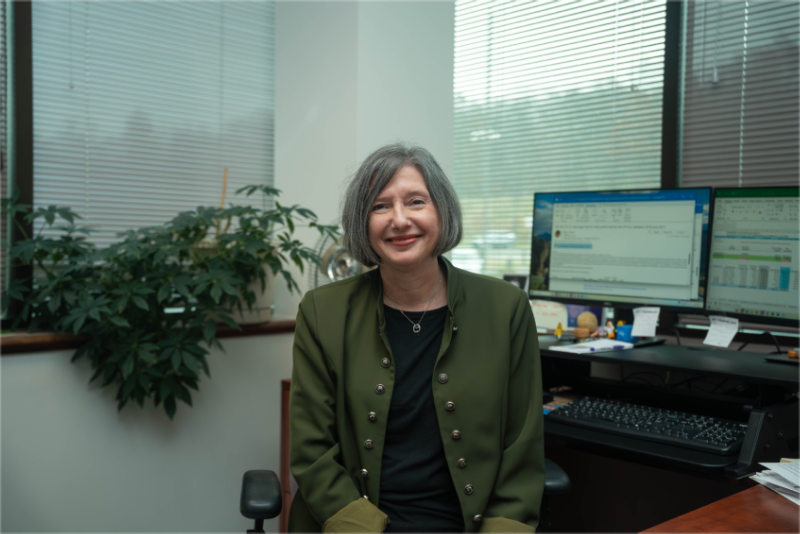
Transit on the Move is a dynamic interview series that spotlights transportation leaders as they share insights and innovations on the road ahead for our evolving transit landscape. Here we have an excerpt from an interview of Connecticut Department of Transportation (CTDOT) Transit Administrator Lisa Rivers, conducted by CTtransit's Vanessa Brooks, Executive Director of External Affairs.
Vanessa Brooks: What does a typical day look like for you?
Lisa Rivers: The best part of this job is that I don’t have a typical day, [it’s] ever changing. It’s things that you would never expect. You think you’ve got a clear path ahead of you, and “Oh, wait, no you’ve got to do this still.” And “No, we don’t want that.” Never a straight path working for the state government.
VB: What I hear you saying is there’s never a dull day. It’s never boring.
LR: That is also true, yes. I think part of my success here at CTDOT has been my ability to navigate and learn. Not necessarily how to get around things, but how to use them to my advantage and being aware of what might come up and get in the way.
VB: Let’s talk about the priorities over the next three years for CTDOT. Can you share some of those priorities with us?
LR: Our governor has issued some priorities for us in terms of access to opportunity, affordability and accountability. Those are our marching orders from our governor, but we also have our marching orders from the current federal level, from [the] Federal Transit Administration. They want us focusing on security, cleanliness and efficiency.
At CTDOT, we are folks who pay attention to the transportation industry across the U.S. We are aware of agencies facing fiscal cliffs where major funding challenges led to deep service cuts that directly affected customers of that system.
The CTDOT team has been very careful with how we spend money that was given to us by the federal government to support operations during COVID, and we still have maybe another year of federal funding left that we can use to help support operations. But after that, we are going to be running into issues with our budget as well, and so right now we are planning and looking at bus and rail services and how we’re going to be able to continue operating what we are operating today in the future. Where will that money come from?
VB: Tall, tall task in these tough economic times.
LR: We’re also moving forward with a new type of fare collection system.
One thing that I like about this particular project is that we’re going to be partnering with Bank On Connecticut. It’s a nonprofit, and it helps support folks who are unbanked or underbanked get access to low-cost checking accounts or bank accounts, so that our riders who don’t have a debit care or credit card will be able to take advantage of these low-cost accounts and then be able to tap on board and achieve discounts as they ride and tap.
VB: I understand that the customer service experience (CX) team did a lot of pop-ups, focus groups. How do you believe that those outreach events shaped some of the things that we will see going forward from CTDOT?
LR: Well, the fare collection system alone. That is one of the major complaints we heard about it. Another one of the biggest complaints was the condition of bus stops. In some cases we have people just standing in a dirt patch on the side of the road, and this is not fair.
The bigger CTDOT — engineering and highway construction — we now have a mandate for complete streets, where every project that’s being designed on a state road has to take into account pedestrian access and if there’s any need for bus stop amenities or improvements in the area. So every project being designed by CTDOT comes into my office now and gets reviewed by my engineers so we can make recommendations on what should be put in as part of those projects.
Our commissioner is really empowering us within the bus side of the business and really making sure that all users of our transportation system are considered.
VB: Tell us a little bit about one of the projects — if you can share anything about it — that’s going to have a big impact on our customers.
LR: There’s our move towards battery electric buses (BEB). When you think about the impact of diesel emissions in communities, we’re using clean diesel now. All the big particulates aren’t in the diesel anymore; now it’s only the very, very tiny little particulates that are in there, and that just gets right into your lungs. It might be cleaner as diesel, but it’s still coming out in your neighborhood, so being able to put BEBs out there, I think that’s a huge benefit for our riders and the communities that they’re in.
VB: Do you see the entire fleet being BEB and us actually phasing out the diesel buses period?
LR: It is actually a requirement right now in statute, and the governor has issued an executive order that does not allow CTDOT to purchase any diesel buses or to provide any matching money to any of the transit districts to purchase diesel buses.
Now, does that mean we’ll actually be able to get to 100 percent electric? There’s a lot of other pieces of the puzzle that have to fall into place to make that happen. We have to work with the utilities to upgrade the transmission lines to bring more electricity into the communities, like to the Hartford garage, and we need to balance the cost of electricity as it goes up. That will increase the cost of us fueling the buses. There is a lot more behind electrification that is well beyond our control.
VB: We always have to consider all of the target audiences, and some people don’t have smartphones, as hard as it is to believe. So how is CTDOT working to make sure that we can keep transit as simple as possible for those folks who don’t have a phone, who can’t use Token Transit, who can’t maybe get on the Transit App?
LR: We actually have money set aside to make bus stop improvements as part of our bus stop enhancement program. We are looking at locations where you have multiple routes or a large number of boardings. So at that location, we would be putting in real-time information signs, and those would offer information both visually as well as audibly with a push button underneath the sign. A lot of clever, clever designs out there. These can rely on solar and cellular service, if we don’t have anywhere to plug them in.